
Underground car parks
Verification of the smoke control system start-up sequence, smoke flow directions compared with the CFD results, and the interaction of the fire detection and alarm system, dampers and jet fans.
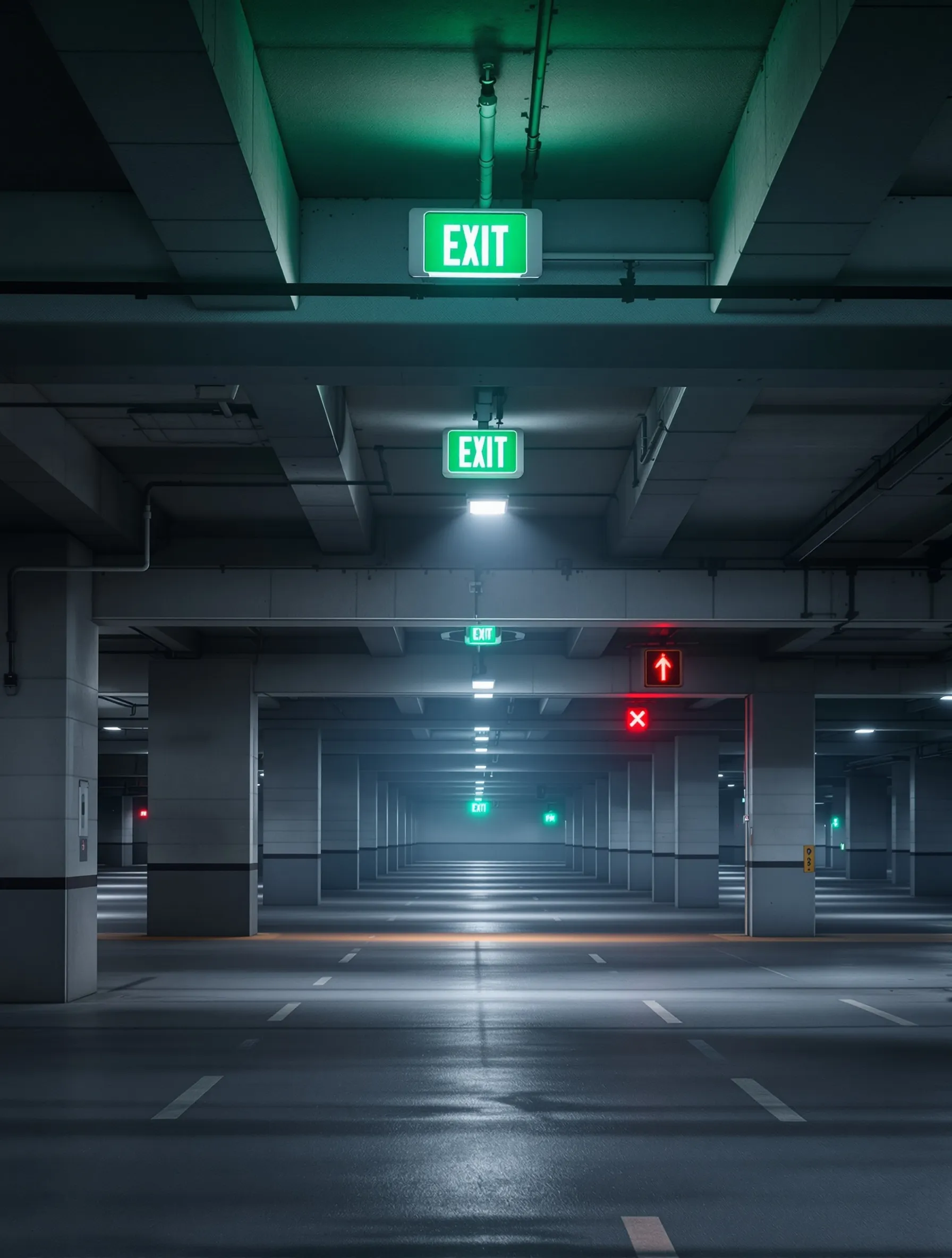
The final check that the smoke control system, as designed and installed, actually works, and confirmation of the CFD simulation results. Since we started we have carried out several hundred acceptance tests - each one ends with a report used during acceptance by the fire service (in Poland, the State Fire Service, PSP).
Scope
We recommend testing at the locations identified in the CFD simulations - this lets us verify the smoke ventilation by comparing the observed flows and the smoke-logged area with the calculated results.
The test also verifies how the building's life safety systems work together - fire detection and alarm, access control, voice alarm, fire dampers and fire shutters.
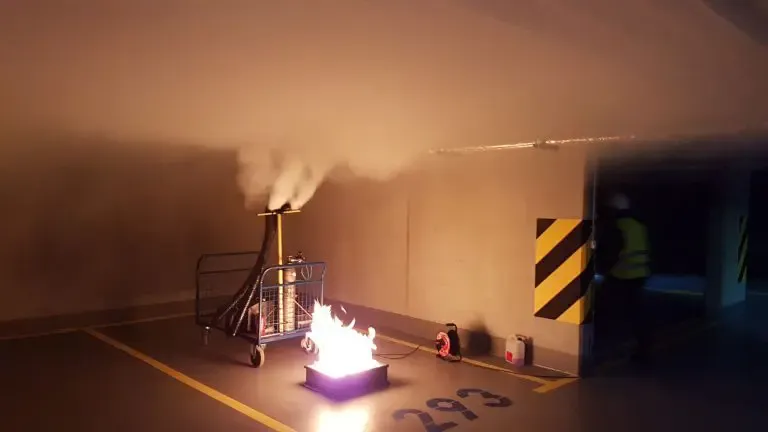
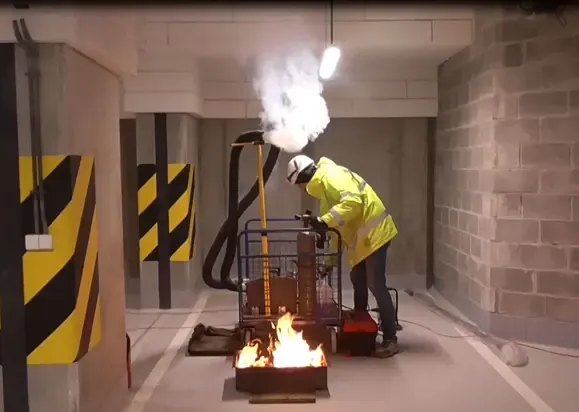
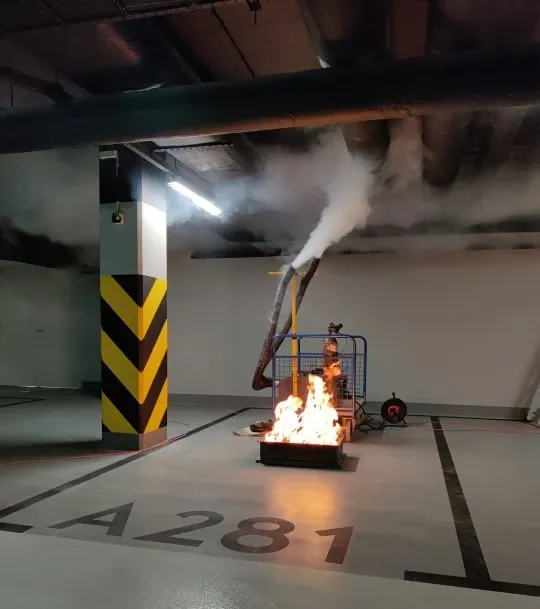
We use trays of burning ethanol as an additional heat source - this produces warm smoke that forms a stable layer under the ceiling and lets us estimate the fire size, plume temperature and smoke flow velocity accurately. The tray size sets the maximum layer temperature.
Mineral oil based smoke is persistent - in still air it lasts up to 4 hours and withstands temperatures up to 180 °C. We test with generators from the renowned British manufacturer Pea Soup, following established engineering practice, including AS 4391 “Smoke management systems - Hot smoke test”.
Applications
Verification of the smoke control system start-up sequence, smoke flow directions compared with the CFD results, and the interaction of the fire detection and alarm system, dampers and jet fans.
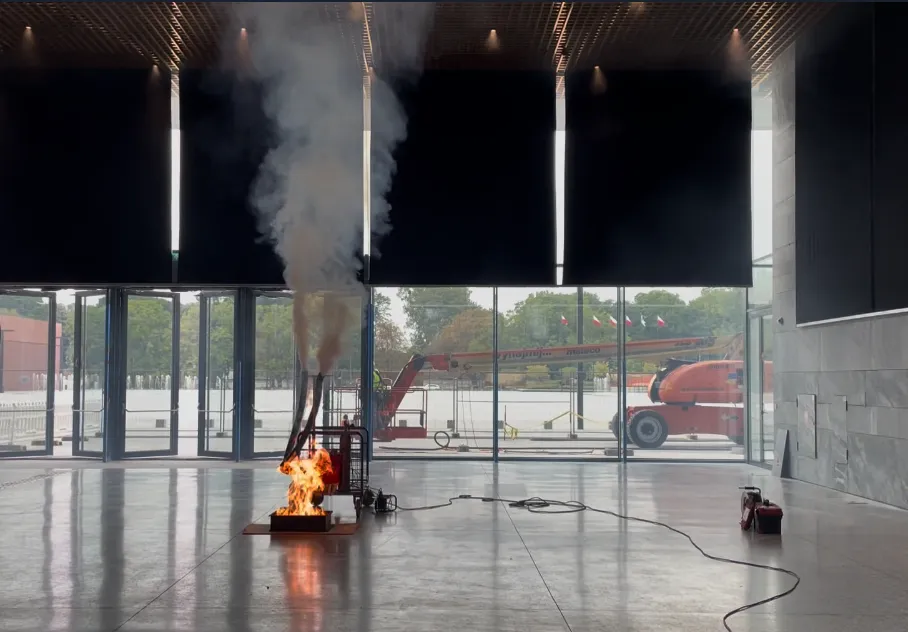
Evacuation from upper storeys often leads through a smoke-ventilated entrance lobby - the test confirms that the smoke layer and visibility are maintained along the escape route.
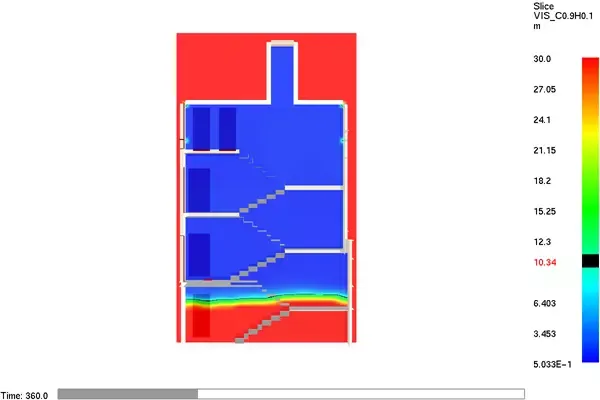
Checking that the stairwell smoke ventilation system removes smoke as designed and allows safe evacuation - to AS 4391.
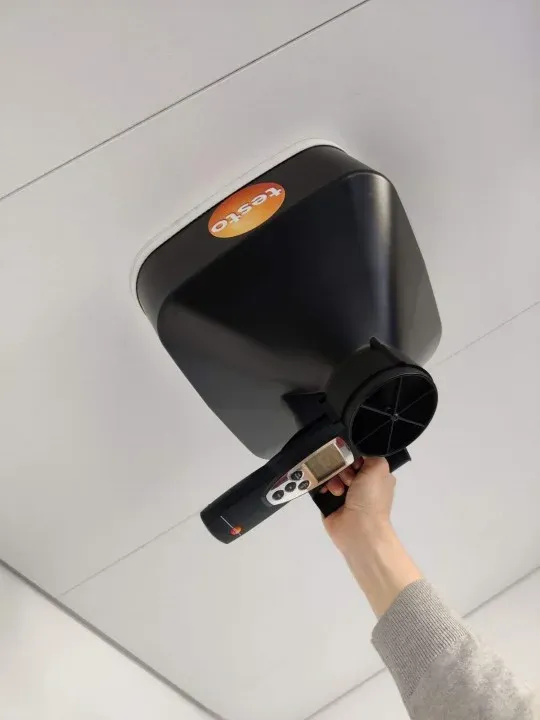
Airflow performance and airtightness measurements of general ventilation and noise measurements to PN-EN 12599 and PN-87/B-02151-2, with a report accepted at technical handover.
Tell us about the building and the handover date - we will schedule the test and prepare the report for the fire service.